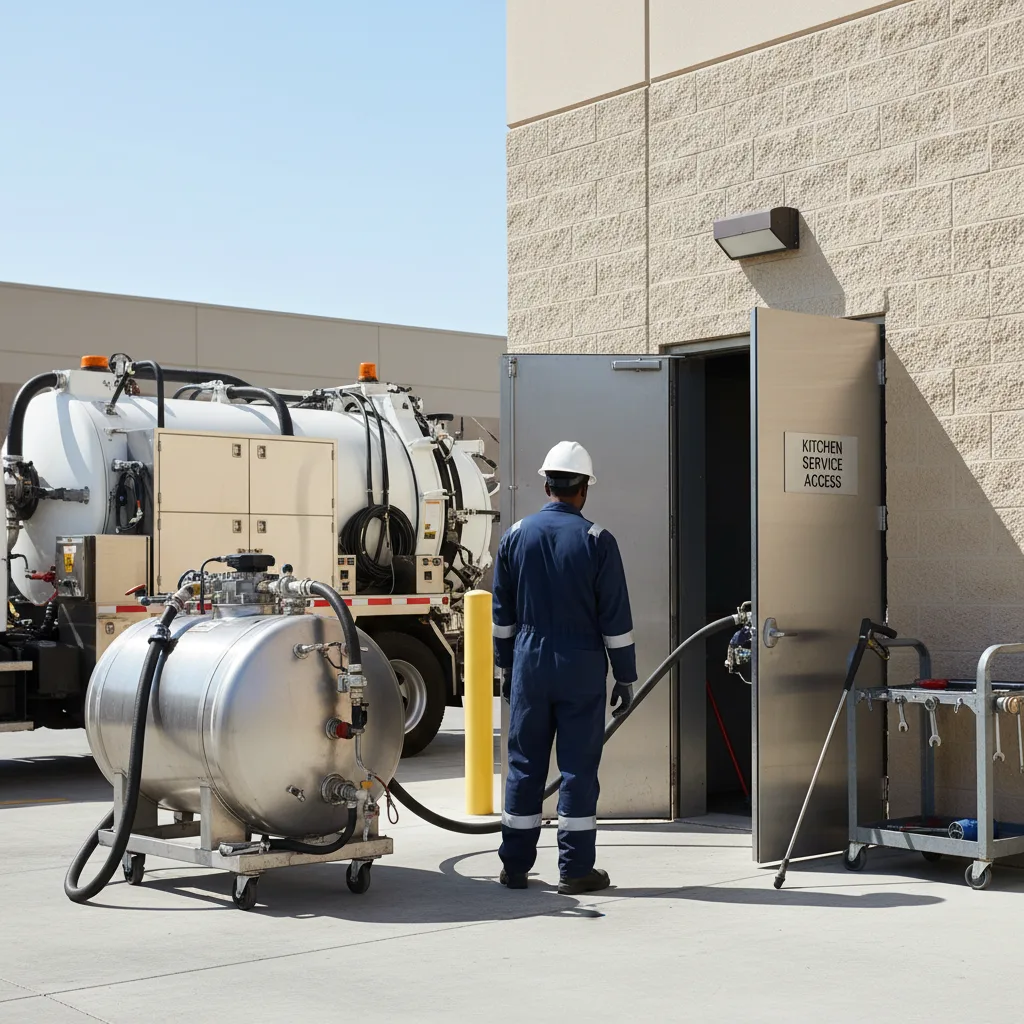

A grease trap maintenance schedule isn't just paperwork — it's your primary defense against health code violations, emergency plumbing failures, and operational shutdowns. This comprehensive guide provides a downloadable template and shows you exactly how to implement a maintenance tracking system that keeps your kitchen compliant and your drains flowing freely.
Why a Written Maintenance Schedule Is Non-Negotiable
Health inspectors don't accept verbal assurances. When they ask for your grease trap maintenance records, you need documented proof of regular service intervals, cleaning dates, and gallons removed. Facilities without written schedules face three critical risks: compliance violations that result in fines ranging from $500 to $10,000, unexpected system failures during peak service hours, and denial of insurance claims when grease-related damage occurs without maintenance documentation.
Most municipal codes require maintenance records for a minimum of three years. A single missing service record during an inspection can trigger a violation notice even if your trap is currently clean.
The operational benefits extend beyond compliance. A documented schedule prevents the "out of sight, out of mind" problem that plagues many kitchens. When cleaning frequency is defined and tracked, you eliminate guesswork and catch accumulation issues before they become backups. Your preventive maintenance approach reduces emergency service calls by 60-80% compared to reactive-only strategies.
For a calculated schedule based on your trap size and volume, try the Grease Trap Cleaning Schedule Planner.
Components of an Effective Grease Trap Maintenance Schedule
Your maintenance schedule should function as both a planning tool and a compliance record. Every effective schedule contains these essential elements: facility identification details including business name and trap location, trap specifications such as capacity in gallons and installation date, and service frequency requirements based on your local jurisdiction's 25% accumulation rule.
The schedule template must include columns for the actual service date, the service provider's name and license number, gallons of fats-oils-grease removed, and the technician's signature. Additional tracking fields should document inspection findings, any repairs performed, and the date the next service is due. This comprehensive approach ensures you capture all information inspectors require.
A maintenance schedule is only valuable if it's accessible. Keep one copy in your kitchen office and provide digital backups to management and your service provider.
The most effective schedules incorporate daily, weekly, and monthly tasks beyond professional pumping. Daily tasks include scraping plates thoroughly and checking for visible grease buildup on baffles. Weekly responsibilities involve inspecting inlet and outlet flow rates and verifying that FOG isn't approaching the 25% threshold. Monthly obligations include reviewing service records for pattern analysis and confirming your next scheduled service is on the calendar.
Determining Your Optimal Cleaning Frequency
The question "how often should we pump?" doesn't have a universal answer. Your cleaning frequency calculation depends on five variables: your trap's total capacity, daily wastewater volume, the fat content of your menu items, the effectiveness of your kitchen best management practices, and your local municipality's specific requirements.
High-volume operations like steakhouses, fried chicken restaurants, and breakfast diners typically require service every 2-4 weeks. Medium-volume establishments including casual dining restaurants and cafeterias usually schedule cleaning every 4-8 weeks. Lower-volume facilities such as coffee shops with minimal cooking or bars serving primarily packaged foods may extend intervals to 8-12 weeks.
These are starting points only. The accurate method involves monitoring your trap's accumulation rate over the first three months. Measure FOG depth weekly using a grease trap measuring stick. When you identify how quickly your specific operation reaches 25% capacity, you can establish the precise interval that prevents violations while avoiding unnecessary service costs.
Schedule your cleaning service during off-peak hours, ideally the day after your highest-volume service period. This ensures you remove maximum accumulation and start the next cycle with a completely clean trap.
Digital vs. Paper Tracking Systems
Your choice between digital and paper schedules depends on your operation's size and technical comfort level. Paper systems using laminated charts and three-ring binders remain completely viable for single-location operations. They require no software investment, work during power outages, and provide tactile accountability when staff physically check boxes after completing tasks.
Digital tracking through spreadsheets, cloud-based applications, or specialized facility management software offers advantages for multi-unit operators. Automated reminders eliminate forgotten service dates, centralized access allows regional managers to monitor all locations simultaneously, and instant reporting capabilities simplify compliance audits. Many modern systems integrate directly with service providers, automatically logging pump dates and volumes when technicians complete work.
Hybrid approaches work well for many kitchens. Maintain a physical schedule board visible to all staff for daily and weekly tasks, while using digital calendars or reminder systems for monthly professional services. This combination provides constant visual accountability while leveraging technology for administrative efficiency.
Integrating Your Schedule with Record-Keeping Requirements
A maintenance schedule and service records serve different but complementary functions. Your schedule is prospective — it tells you when tasks should occur. Your record-keeping system is retrospective, documenting what actually happened. Both are mandatory for compliance.
After each professional cleaning, your service provider should supply a pumping report containing the service date, gallons removed, trap condition assessment, and any recommended repairs. Transfer this information immediately to your maintenance log. Compare the actual service date against your scheduled date — consistent delays indicate you need to adjust your frequency or change providers.
The integration becomes powerful when you analyze trends. If your trap consistently reaches 25% capacity faster than predicted, you're identifying operational issues — perhaps staff training on scraping practices needs reinforcement, or your menu has shifted toward higher-fat items. This data-driven approach transforms maintenance from a reactive chore into a proactive management tool that reduces costs and prevents emergencies.
Training Staff to Follow the Schedule
The most detailed schedule fails without staff buy-in. Designate a grease trap compliance officer responsible for monitoring the schedule, coordinating service appointments, and verifying task completion. This person should receive comprehensive training on why each maintenance activity matters and what happens when schedules slip.
Conduct quarterly refresher training for all kitchen staff covering proper scraping techniques, acceptable disposal methods, and the connection between their daily practices and trap performance. Make the maintenance schedule visible — post it in dish rooms, prep areas, and manager offices. When maintenance becomes part of the visible operational rhythm, compliance becomes cultural rather than just regulatory.
Include grease trap maintenance responsibilities in job descriptions and performance reviews. When staff understand that compliance is an evaluated part of their role, adherence improves dramatically.
Frequently Asked Questions
How long should I keep grease trap maintenance records?
Retain all maintenance records for a minimum of three years, though five years is recommended. Many municipalities require three-year records during inspections or permit renewals. Additionally, if grease-related damage occurs and you file an insurance claim, insurers often request maintenance documentation covering the entire policy period to verify you met your duty of care.
What happens if I miss a scheduled cleaning?
Missing a single scheduled cleaning doesn't automatically trigger violations if your trap remains below 25% capacity. However, delayed service increases your risk of exceeding legal limits, creates liability if backups occur, and may void warranties on pumping equipment. If you must delay service due to emergencies, document the reason and reschedule immediately rather than waiting for the next regular interval.
Can I perform grease trap cleaning myself instead of hiring a professional?
Some jurisdictions allow self-cleaning of small traps under 100 gallons, but you must still dispose of collected grease through licensed haulers — dumping FOG violates environmental regulations everywhere. Most commercial operations benefit from professional service because licensed technicians provide required documentation, ensure proper disposal, identify developing problems, and often spot issues that untrained staff miss.
Should my maintenance schedule differ between summer and winter?
Yes, seasonal adjustments often make sense. Cold weather causes grease to solidify faster, potentially requiring more frequent winter service especially in unheated areas. Conversely, summer months may see higher customer volume at some establishments, increasing waste generation and accelerating accumulation. Review your service records annually to identify seasonal patterns and adjust your schedule accordingly.
How do I handle maintenance scheduling for multiple grease traps in one facility?
Large facilities with multiple traps should maintain separate schedule lines for each unit, identified by location such as "main kitchen," "prep area," or "wok station." Traps serving different functions accumulate at different rates — your main dishwashing trap likely needs more frequent service than a hand sink interceptor. Coordinate scheduling so all traps are serviced during the same visit when possible to reduce service call fees while maintaining appropriate individual frequencies.
A properly implemented grease trap maintenance schedule protects your operation from violations, reduces emergency repair costs, and demonstrates your commitment to regulatory compliance. The time invested in creating and following a detailed schedule pays dividends through uninterrupted operations and peace of mind during health inspections. Find verified grease trap services in your area to establish your maintenance partnership today.

Author: Grease Trap Locator Editorial Team
The Grease Trap Locator editorial team covers FOG compliance, grease trap maintenance, and commercial kitchen regulations across the US and Canada. Our guides are written for restaurant owners, facility managers, and food service operators who need practical, accurate information without the fluff.
Find verified, local contractors who handle cleaning, pumping, and FOG compliance — in your area.