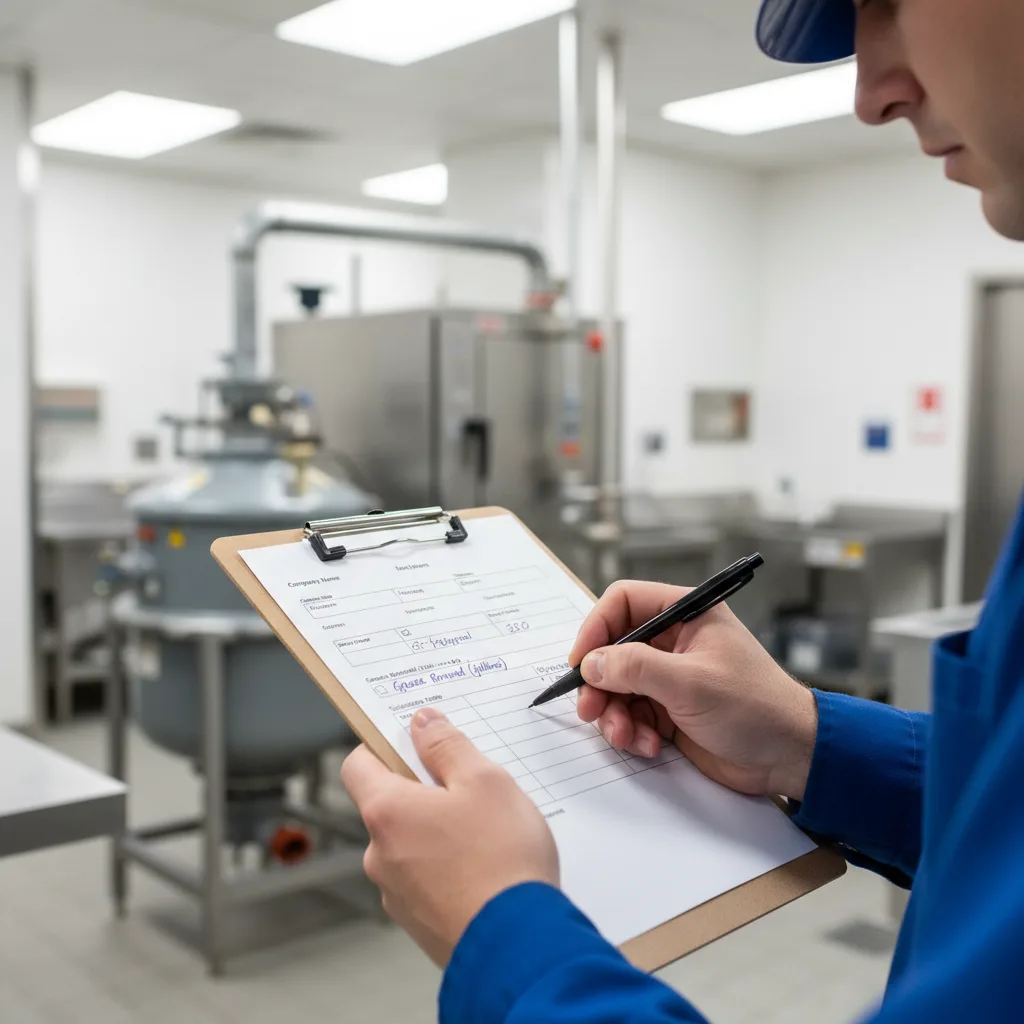

There is no single North American grease-trap permit. The approvals for a restaurant, café, commissary or institutional kitchen depend on the property, project and rules adopted by the authorities serving that address. Before buying equipment or scheduling excavation, confirm the requirements in writing.
1. What does the local sewer or FOG control authority require?
2. What does the local building or plumbing authority require?
Why two authorities may be involved
The federal pretreatment framework prohibits discharges that cause pass-through or interference and prohibits solid or viscous pollutants in amounts that obstruct a publicly owned treatment works. It also allows local wastewater authorities to develop and enforce local limits and best-management practices. The federal rule does not create one restaurant-equipment or permit process for every city.
A sewer or FOG program may review wastewater discharge, approved equipment, maintenance or records. A building or plumbing department may separately review plans, piping, access, location, installation and inspection. A health authority may have additional requirements for a food-service project. Treat these as separate confirmations rather than assuming one approval covers all of them.
Information to prepare before contacting the authorities
- Exact street address and whether the property uses municipal sewer or an onsite wastewater system.
- Business type, menu and food-preparation methods.
- Kitchen equipment and every fixture or drain that may receive food-contact wastewater.
- Existing grease-control equipment, if any, including make, model, capacity, condition and connection.
- Project type: new construction, change of use, renovation, relocation or replacement.
- A simple floor or site plan showing fixtures, proposed equipment, piping route and service access.
- Expected opening date and the contact details for the property owner and project professional.
Questions to ask in writing
- Is this operation and wastewater connection covered by your current rules?
- Are plan review, discharge approval, a building or plumbing permit, or inspections required?
- Which equipment types and sizing method are accepted for this specific project?
- Are there installation-location, access, venting, sampling or connection requirements?
- Which installer, service-provider or waste-hauler credentials apply?
- What maintenance, disposal-documentation and record-retention rules apply after approval?
- What are the current forms, fees, review sequence and estimated processing time?
What official examples show
New York City: NYC DEP states that its sewer-use regulation requires commercial establishments that generate FOG to install, operate and maintain properly sized grease interceptors. DEP also describes city inspection and enforcement procedures. Those are NYC requirements, not a national permit model.
Toronto: Toronto Municipal Code Chapter 681 covers defined food operations connected to the municipal sewer and requires interceptor installation in compliance with the Building Code and maintenance under the local environmental code of practice. This illustrates why sewer-program and building-code questions should be asked separately.
Avoid these common planning mistakes
- Do not buy from a generic capacity chart before the local sizing method is confirmed.
- Do not assume an existing unit, old building or prior restaurant use creates an exemption.
- Do not assume a sewer-program approval is the same as a building or plumbing permit.
- Do not rely on national fee, fine, review-time or installer claims. Obtain current local information.
- Keep the written determination, approved plans, inspection records and any required service documents together.
Frequently Asked Questions
Does every grease trap installation require a permit?
No single national answer applies. Ask both the sewer or FOG control authority and the local building or plumbing authority serving the property. One may require an approval even when the other does not.
Does replacing an existing unit require approval?
It depends on the local rules and the work being performed. Before replacement, give the authorities the address, existing equipment details, proposed equipment and the scope of plumbing or excavation work.
Who is allowed to install or service the equipment?
Installer, service and waste-disposal credentials vary by jurisdiction. Ask the responsible authorities which licences, permits or registrations apply before hiring anyone.
How long does review take and what does it cost?
Review times and fees are set locally and can change. Obtain the current application, fee schedule and expected review sequence directly from each responsible authority.
What should a food truck or commissary operator ask?
Ask the local health, wastewater and building authorities how wastewater must be stored or discharged, whether a commissary is required, and which location is responsible for grease-control equipment and records.
Official sources
- U.S. EPA — National Pretreatment Program Implementation
- 40 CFR 403.5 — National pretreatment standards: prohibited discharges
- NYC DEP — A Plan to Prevent Confirmed Sewer Backups
- Toronto Municipal Code Chapter 681 — Sewers
Fact-checked August 11, 2026. Local rules change; verify the current requirements for the project address.

Author: Grease Trap Locator Editorial Team
The Grease Trap Locator editorial team covers FOG compliance, grease trap maintenance, and commercial kitchen regulations across the US and Canada. Our guides are written for restaurant owners, facility managers, and food service operators who need practical, accurate information without the fluff.
Find local contractors who handle cleaning, pumping, and FOG compliance — in your area.