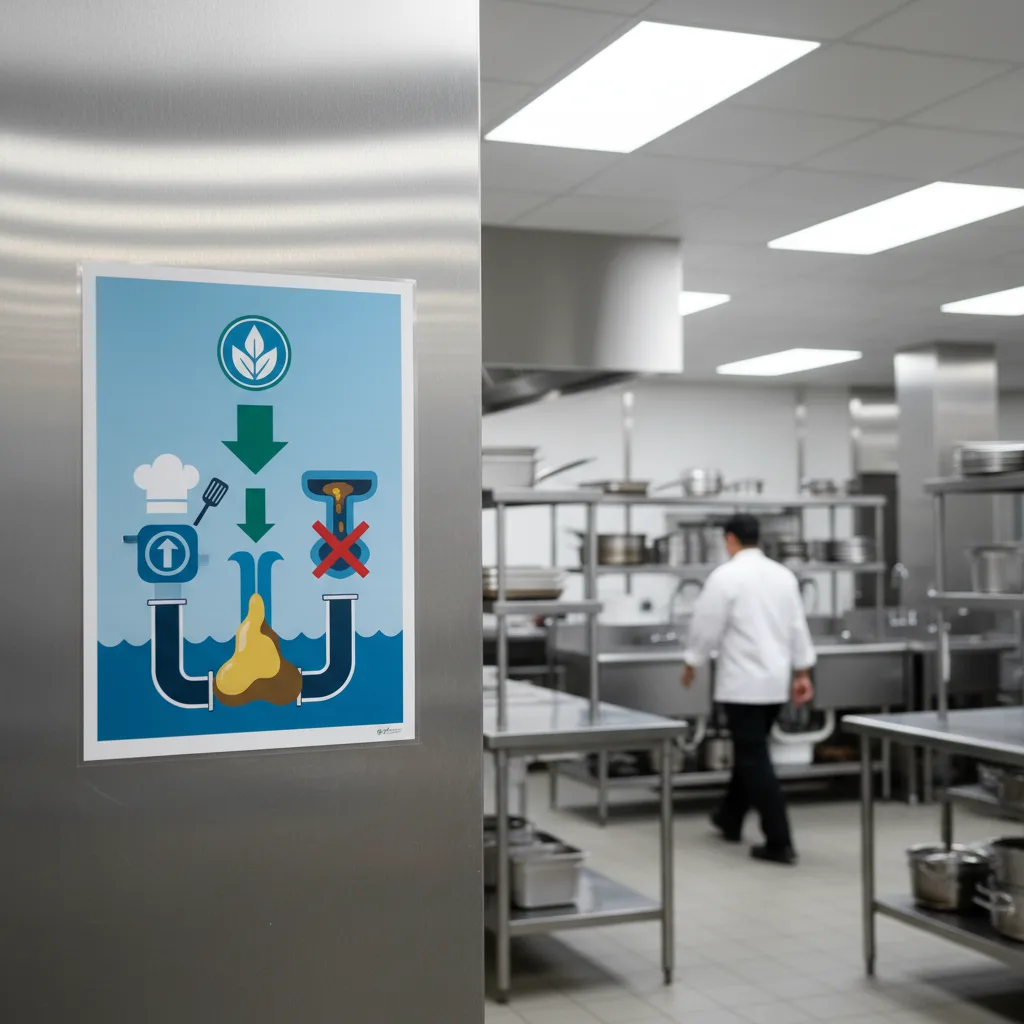

A municipal FOG program is a local wastewater-control program, not a single North American rulebook. Some sewer authorities use education, discharge controls, equipment requirements, inspections, records or enforcement to reduce fats, oils and grease entering their systems. The exact program depends on the authority serving the property.
The federal framework and the local rule
EPA explains that local municipalities are mostly responsible for implementing and enforcing the national pretreatment program. Under 40 CFR 403.5, users may not introduce pollutants that cause pass-through or interference, and solid or viscous pollutants may not be discharged in amounts that obstruct flow and cause interference. Publicly owned treatment works may develop local limits and best-management practices.
That framework does not itself impose one grease interceptor, cleaning schedule, permit, record period, hauler rule or fine on every food business. Those details must be checked in the current local sewer, plumbing, building and health requirements.
What a local program may address
- Which businesses, activities and wastewater connections are covered.
- Whether plans, approvals, discharge authorization or inspections are required.
- Approved grease-control equipment and the local sizing or design method.
- Kitchen practices, maintenance, disposal documentation and records.
- Installer, service-provider or waste-hauler qualifications.
- Notices, corrective actions and enforcement under the local ordinance.
“May” is important: this is a list of questions a program can address, not a promise that every program has every component.
Three official examples show the variation
Fairfax County, Virginia
Fairfax County says most grease traps need cleaning before they are 25 percent full of floating grease and settled food solids. It allows restaurants to clean their own grease traps or hire a permitted sewage-disposal contractor, and its local code requires cleaning records to remain available for inspection for three years. Those details belong to Fairfax County and should not be presented as national rules.
New York City
NYC DEP states that its sewer-use regulation requires commercial establishments that generate FOG to install, operate and maintain properly sized grease interceptors. DEP describes initial, maintenance, random and targeted inspections, plus city-specific orders, summonses and penalties. This is a strict named-city example, not a standard enforcement ladder for other municipalities.
Toronto, Ontario
Toronto Municipal Code Chapter 681 covers defined operations where food is cooked, heated, processed or prepared and the premises connect to the municipal sewer. It requires grease interception in compliance with the Building Code and maintenance under Toronto's food-service environmental code of practice. Its coverage and legal structure differ from both Fairfax and NYC.
How to identify the program that applies to a property
- Confirm where the wastewater goes: municipal sewer, another utility or an onsite system.
- Identify the sewer or wastewater authority serving the exact address.
- Find the authority's current sewer-use ordinance, FOG page and food-service forms.
- Ask whether the business and project are covered, and request the answer in writing.
- Separately ask the building or plumbing authority about plans, permits, inspections and approved sizing.
- Keep the determination, approved documents and locally required maintenance records together.
Do not transfer one city's numbers to another
A percentage threshold, record period, inspection frequency, permit fee, fine or contractor rule is meaningful only with its jurisdiction, issuing authority, current date and exact source. A useful national guide should help operators find the responsible authority and ask the right questions; it should not invent an “average” legal program.
Frequently Asked Questions
Does every city have the same FOG program?
No. Program coverage, approvals, equipment, inspections, maintenance, records and enforcement vary by the authority and locally adopted rules.
Is the 25 percent rule a national requirement?
No national 25 percent maintenance rule was identified. Fairfax County uses 25 percent guidance locally, while other authorities may use different schedules or performance requirements.
Must every restaurant hire a licensed hauler?
Not everywhere. Fairfax County expressly allows restaurants to clean their own grease traps while keeping the locally required records. Ask the authority serving the property which service and disposal credentials apply.
How long should FOG records be kept?
Record types and retention periods are local. Fairfax County specifies three years for its cleaning records; that period should not be applied to another jurisdiction without checking its current rule.
Can a national guide predict fines or closure?
No. Enforcement tools, notice procedures, penalties and other consequences depend on the local ordinance and facts. Use the current official source for the named jurisdiction.
Official sources
- U.S. EPA — National Pretreatment Program Implementation
- 40 CFR 403.5 — National pretreatment standards: prohibited discharges
- Fairfax County — Fats, Oils and Grease program
- NYC DEP — A Plan to Prevent Confirmed Sewer Backups
- Toronto Municipal Code Chapter 681 — Sewers
Fact-checked August 11, 2026. Always verify the current local rule for the property address.

Author: Grease Trap Locator Editorial Team
The Grease Trap Locator editorial team covers FOG compliance, grease trap maintenance, and commercial kitchen regulations across the US and Canada. Our guides are written for restaurant owners, facility managers, and food service operators who need practical, accurate information without the fluff.
Find local contractors who handle cleaning, pumping, and FOG compliance — in your area.